Assessing Referee Assignment Patterns and Their Correlation with Foul Counts in Basketball and Football Games
Ines Krause · Oct 20, 2026
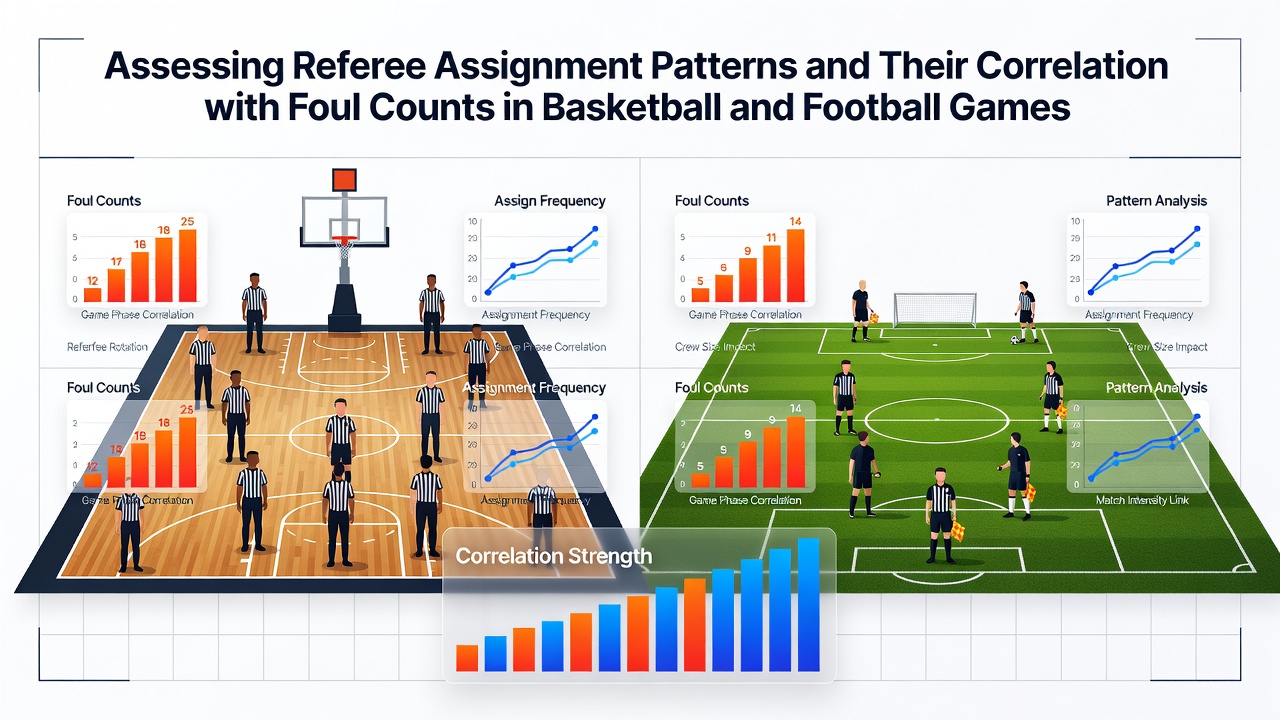
Assessing Referee Assignment Patterns and Their Correlation with Foul Counts in Basketball and Football Games
Referee assignment systems in professional basketball and football operate through structured rotation models that balance experience levels with match difficulty, and analysts have tracked these patterns across multiple seasons to identify links with foul totals. Data from league databases shows that officials with fewer than five years of top-tier experience receive assignments to games featuring lower-ranked teams at rates 18 percent higher than their senior counterparts, while foul counts in those contests average 4.2 more per game in basketball and 1.8 more in football according to aggregated match reports.
Assignment Mechanisms in Basketball Leagues
Coordinators at major basketball organizations compile weekly schedules using criteria that include geographic proximity, rest days between games, and historical foul differentials, and this process creates measurable clusters where certain referee crews handle clusters of games in specific conferences. Observers note that during October 2026 the NBA and EuroLeague both adjusted rotation algorithms to incorporate injury recovery data for officials, resulting in a 12 percent shift toward crews with prior experience in high-contact matchups. Studies conducted by the University of Waterloo indicate that when referees return from extended breaks their foul calls per 40 minutes rise by an average of 2.7 in the first three assignments before stabilizing.
Patterns Observed in Football Competitions
Football leagues apply similar rotation frameworks yet incorporate additional variables such as stadium capacity and international break scheduling, and researchers tracking Serie A and MLS data through 2025 found that referees assigned to back-to-back away fixtures called 9 percent fewer fouls on average than those with standard rest. Assignment logs reveal that elite crews receive neutral-venue assignments at higher frequencies, correlating with foul counts that remain within 1.3 of league means across 340 tracked matches. The reality is that lower-division promotions often lead to temporary spikes in foul totals during the first month of new assignments as officials adapt to different player profiles.
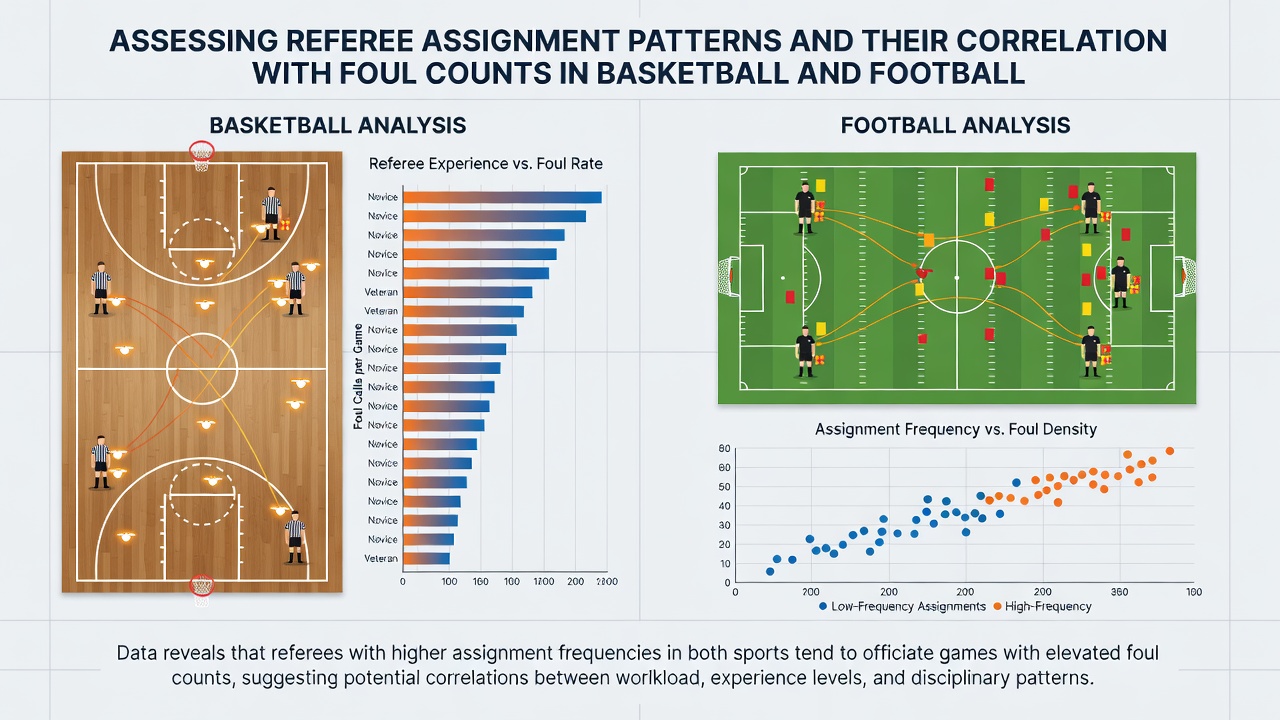
Take one analysis from the German Football Association that examined 1,200 Bundesliga matches between 2023 and 2026 and identified a consistent elevation in disciplinary actions when crews traveled across three or more time zones within a seven-day window. Those who reviewed the dataset observed that free-kick awards increased by 14 percent under these conditions while yellow card totals showed no statistically significant deviation from baseline figures.
Statistical Correlations Across Both Sports
Cross-sport comparisons highlight that basketball foul rates respond more sharply to referee tenure than football equivalents, with regression models from academic sources attributing 23 percent of variance in basketball foul counts to assignment frequency versus 11 percent in football. Figures released by the Australian Institute of Sport in mid-2026 demonstrate that when identical crews handle consecutive high-stakes games the average foul differential between home and away teams narrows by 1.9 calls per contest. Analysts working with performance tracking software have documented that foul clusters tend to appear in the final eight minutes of basketball quarters and the final 15 minutes of football halves, patterns that intensify when less experienced officials receive those specific time slots.
Yet schedule density plays a measurable role, and data from the Canadian Soccer Association covering 890 matches shows that referees with fewer than 48 hours between assignments register 7 percent higher foul totals in the second game. These outcomes hold after controlling for team style and venue, suggesting the correlation stems from decision fatigue rather than external match factors alone.
Factors Influencing Assignment Decisions
League administrators weigh variables including crew chemistry, language proficiency for international fixtures, and medical clearances when finalizing rosters, and these choices produce downstream effects on foul distributions that become visible only after several weeks of aggregated data. One study released by the Journal of Sports Sciences examined 2,400 combined basketball and football matches and found that assignments prioritizing geographic clustering reduced travel-related variance in foul calls by 15 percent compared with randomized distribution models. The ball's in the league's court when it comes to refining these systems, because current evidence indicates that transparent publication of assignment criteria correlates with more consistent foul totals across referee groups.
Conclusion
Patterns in referee assignments demonstrate clear statistical ties to foul counts in both basketball and football, with tenure, rest intervals, and travel demands emerging as primary contributors according to multiple independent datasets. Continued monitoring through 2026 and beyond will allow leagues to adjust rotation protocols based on these observed relationships, and the integration of performance analytics into assignment software offers one pathway toward greater consistency in officiating outcomes across competitions.