How Travel Schedules and Time Zone Shifts Influence Outcomes Across Endurance Events, Team Leagues, and Motor Competitions
Olivia Walter · Aug 18, 2026
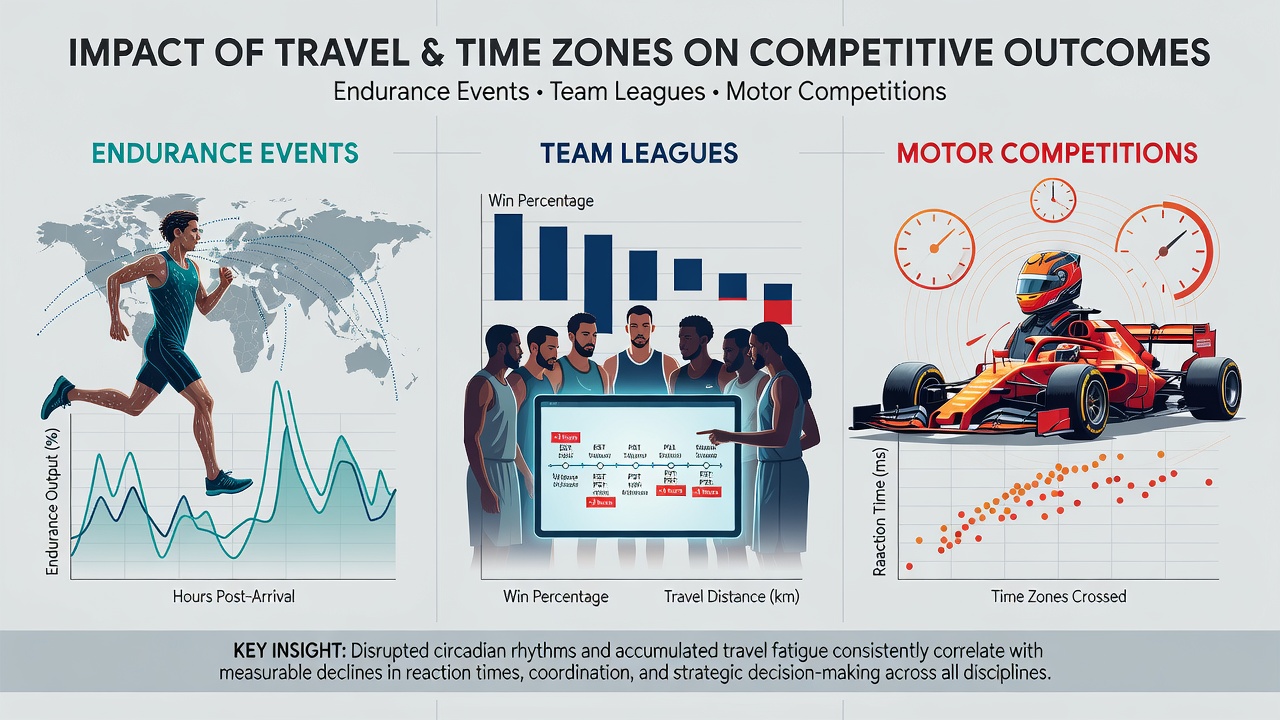
How Travel Schedules and Time Zone Shifts Influence Outcomes Across Endurance Events, Team Leagues, and Motor Competitions
Travel schedules and time zone changes create measurable disruptions in athlete performance across multiple sports disciplines, and researchers have documented these effects through controlled studies and performance data analysis. Circadian rhythm misalignment from rapid east-west travel leads to reduced reaction times, altered sleep patterns, and shifts in core body temperature that directly affect endurance capacity, decision-making speed, and physical recovery rates. Data from multiple international competitions shows that teams and individuals crossing more than three time zones experience performance decrements that persist for several days after arrival.
Endurance Events and Jet Lag Effects
Endurance athletes face particularly acute challenges when competing after transcontinental or intercontinental flights because prolonged events like ultramarathons, Ironman triathlons, and multi-stage cycling races demand sustained energy output over hours or days. Studies indicate that athletes who travel eastward experience greater sleep disruption than those traveling westward, since the body must advance its internal clock rather than delay it. In one documented case, a group of marathon runners who flew from Europe to Australia showed elevated cortisol levels and decreased VO2 max readings for up to five days post-arrival, according to measurements taken by sports physiologists. These physiological changes translate into slower split times during the latter stages of races, where accumulated fatigue compounds the effects of incomplete circadian adaptation.
Event organizers in August 2026 are scheduling several high-profile endurance competitions that will require athletes to manage these variables carefully, including long-distance cycling stages and multi-day adventure races that cross multiple time zones. Preparation protocols now commonly include pre-travel light exposure schedules, strategic napping, and melatonin timing to accelerate adjustment, though individual responses vary based on age, fitness level, and prior travel experience. Observers note that athletes who implement structured acclimatization routines maintain closer to baseline performance levels compared with those who arrive and compete immediately.
Team Leagues and Recovery Demands
Professional team leagues such as basketball, soccer, and rugby operate on dense schedules that frequently require cross-country or international flights between matches, and performance metrics reveal consistent patterns tied to travel distance. Research conducted by the Australian Institute of Sport demonstrates that teams traveling westward across four or more time zones show statistically significant drops in scoring efficiency during the first two games after arrival, while defensive metrics remain more stable. The physical toll extends beyond the players themselves, as support staff including medical personnel and coaches also experience disrupted sleep that can affect tactical decisions during games.
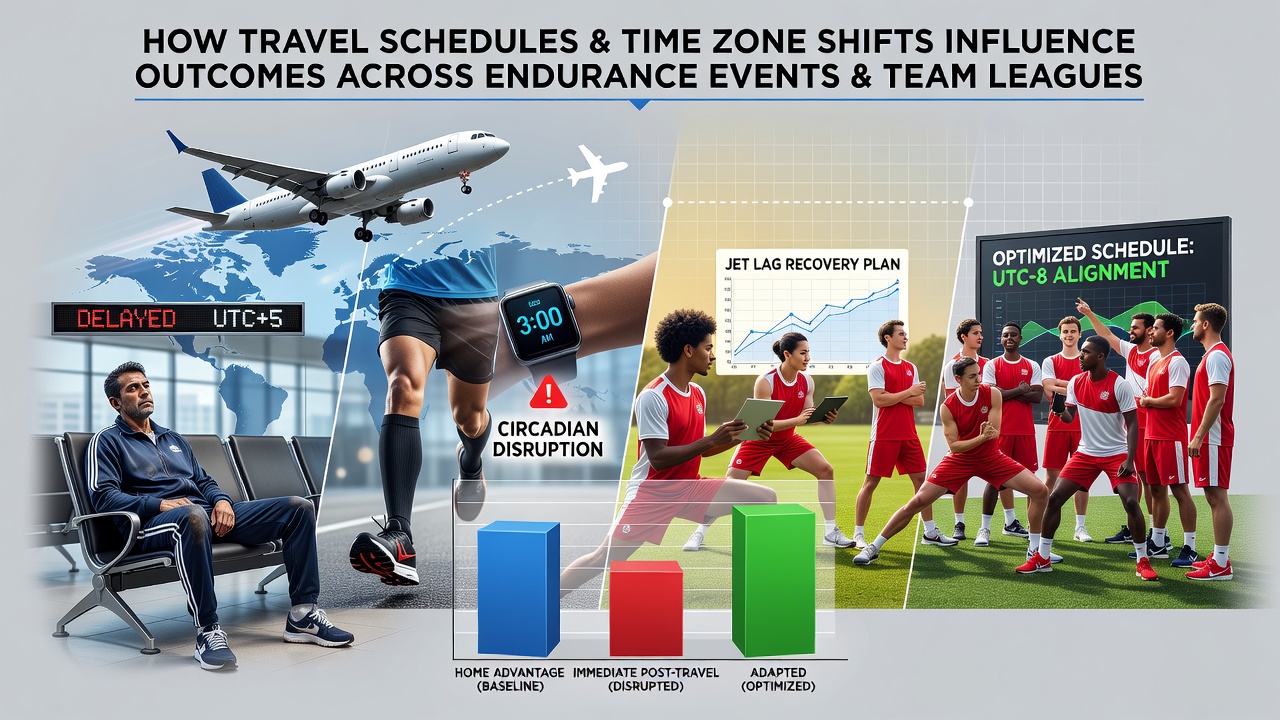
League schedules in North American and European circuits often cluster games in ways that minimize back-to-back long-haul travel, yet unavoidable stretches still occur during playoff pushes or international tournaments. Teams that rotate rosters more aggressively during these periods tend to preserve overall win rates better than those relying on the same core players for consecutive high-travel weeks. Heart rate variability tracking used by several professional organizations provides objective data showing slower autonomic recovery in athletes who cross time zones without adequate rest days built into the itinerary.
Motor Competitions and Operational Logistics
Motor sports introduce additional layers of complexity because both human performance and mechanical operations must align under time zone pressure. Formula 1 teams transport equipment and personnel across multiple continents each season, and telemetry data collected during practice sessions indicates that driver lap times can shift measurably when circadian rhythms remain unadjusted. Mechanics working overnight to prepare cars after long flights report higher error rates in the initial hours of setup, which can influence qualifying positions and race strategy. NASCAR teams operating within a single country still encounter time zone effects when traveling between East Coast and West Coast venues, with pit crew reaction times showing temporary declines after eastward flights according to internal performance logs.
August 2026 features several motor racing events that will test these logistical frameworks, including endurance races and grand prix rounds that require rapid relocation between venues in different hemispheres. Teams now employ dedicated recovery specialists who coordinate light therapy, nutrition timing, and sleep schedules for both drivers and crew members. These interventions have become standard practice because historical race data reveals that organizations ignoring travel recovery consistently underperform relative to their equipment capabilities during the first events of a new time zone block.
Conclusion
Performance data across endurance events, team leagues, and motor competitions demonstrates that travel schedules and time zone shifts produce measurable, sport-specific impacts that organizations address through targeted protocols. Continued monitoring by research institutions and governing bodies provides the evidence base for refining travel strategies, and future schedules will likely incorporate these findings to optimize competitive balance and athlete welfare.